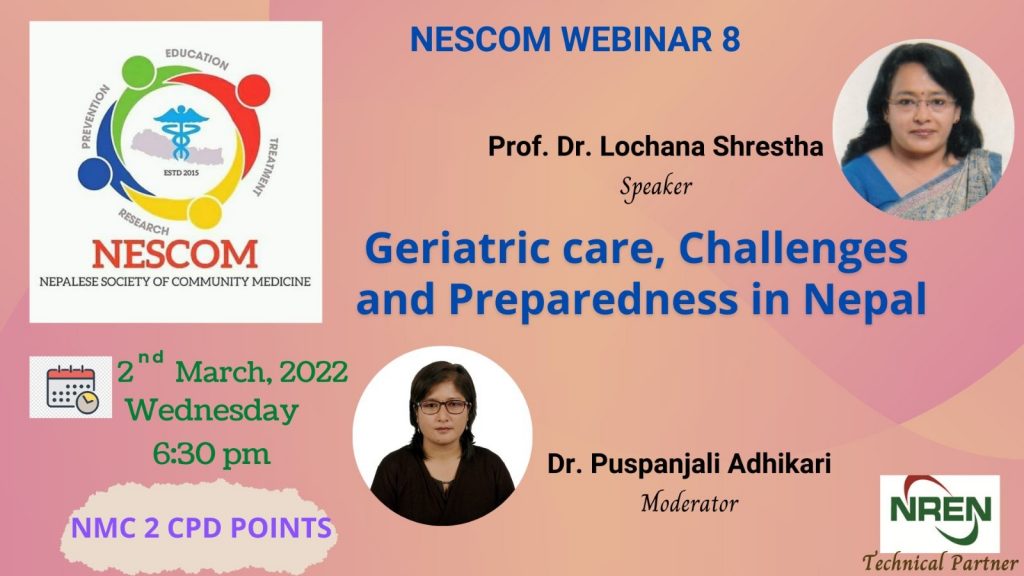
8th Webinar Summary Report on Geriatric Care, Challenges and Preparedness in Nepal, 2nd March 2022

Summary:

The World Health Organization (WHO) finds healthy aging as the process of developing and maintaining the ability that enables wellbeing in older age. It is natural for everyone to expect to be happy and healthy in later parts of life. We all dream of an old age without dependence or inconvenience. Anyone living in any part of the world should have the opportunity to live a long and healthy life. Healthy aging is one of the WHO’s primary focuses between 2015-2030 as the decade between 2020-2030 has been dubbed as the “decade of healthy aging”. This webinar will help contribute to an enhanced understanding on prevailing challenges and preparedness for Geriatric care in Nepal.

Brief Background:

The proceedings of the webinar was started by Master of Ceremony, Dr. Alisha Manandhar. Dr. Alisha started with the introduction of the speaker Prof. Dr. Lochana Shrestha and the moderator Dr. Puspanjali Adhikari. Prof. Shrestha is currently the President of Nepalese Society of Community Medicine (NESCOM) and is leading the Community Medicine department at Nepalese Army Institute of Health Science (NAIHS). She is also an honorary member of the Council of UN International Institute of Aging. Her publications on International and National are related to Geriatric, Diabetes, Maternal and Child Health and HIV/AIDS. Dr. Puspanjali Adhikari, is the project lead of several international collaborative projects on non-communicable disease and is also an Executive Committee of Nepalese Society of Communication Medicine.

The webinar started with a brief introduction about the Healthy Geriatric Care and decade of healthy aging between 2020 to 2030 in the world and a brief about the challenges of healthy aging in context to Nepal. She highlighted on various data about Geriatric aged people over the period of time around the globe and of Nepal.  Prof. Lochana briefed about geriatric care provided in different places by different levels of care givers, depending on persons need. Though it has been a hidden issue in community level, the speaker had given emphasis on the linkage between burden of NCDs and growing old age population. Additionally, she talked about the various EDP Key activities, quality health care for elderly and the outcomes of specific focused geriatric care. Most importantly, the speaker focused on issues and challenges that needs to be addressed at the policy level. She further discussed the components of Geriatric care, facilities that are necessary for the care of elderly people followed by the challenges and policy implemented by the government for the care of elderly people. Prof. Shrestha emphasized on the challenges about the elderly people care policy adopted as well as some suggestions for the policy makers regarding the care of elderly people. She had also put forwarded some of the long-term services and also had talked about the importance of recreational services, spiritual services and their outcomes on old age population.

The completion of the presentation was followed by many interesting questions raised by the participants making it an immensely interactive session. Five questions zoom poll was put forward in discussions. The webinar lasted for nearly about 2 hours with 95 participants and ended with the announcement of an upcoming webinar on “Whole Genomic Sequencing in Nepal: Possibilities and Challenges.”

Objective:

  1. To provide information about Healthy Geriatric Care in Nepal
  2. To highlight on prevailing challenges and awareness in Geriatric Care in Nepal

Points for Policy brief:

  1. The Government of Nepal has provided a limited allowance for the elderly people, the amount provided is not sufficient for them. The Government of Nepal should increase the allowance for elderly people. They should also increase the expenditure in health and benefit for the elderly by focusing mainly in the development of human resource i.e., trained personnel, proper facilities and equipment.
  2. Data system of the elderly people should be accurate. Data related to elderly diseases should be collected from both public hospitals and private hospitals, local bodies and the Ministry of Health and Populations.

Points to be discussed in executive committee

  1. Reason for long term care service not being open towards geriatric care and service related to geriatric service.
  2. Policy suggestions for the government to mitigate the absence of legal structural framework, policy, plan and process to support geriatric care.

Key points that came out during the discussion:

1. There were 8.6% of geriatric population which is bound to increase in coming days
2. Geriatric population is facing various problems that include physical problems, psycho-social problems which needs urgent attention
3. Geriatric Care is important as it allows senior patients to receive specialized care that understands their needs. Nowadays, the priority has been shifting to geriatric groups
4. Leading cause of deaths among the elderly people is due to non-communicable disease
5. Increase in the proportion of elderly population may cause risks such as:
a. Structural changes
b. Conflict: Where elderly people think that they are left out from society.
c. Modernization: Difficult in adopting or adjusting with the system due to change in technology and methodology over the period of time.
6. Geriatric care should be specific, effective, and passionate and age friendly with love and affection.

7. Components of geriatric care includes:

a. The presentation of diseases or problems is frequently complex
b. Common diseases present atypically in this age group
c. Comorbid diseases may confound the presentation
d. Poly-pharmacy is common and may be a factor in the presentation, diagnosis and management since geriatric group is taking so many drugs at once
e. About 30% to 40% of elderly patients have cognitive impairment so recognition of possible cognitive impairment is very important
f. Some diagnostic tests may have different normal values
g. The likelihood of decreased functional reserve must be anticipated. For example, the immune system may become sluggish in response to infection
h. The patients might have to rely on caregivers because social support systems may not be adequate to the patient at that period of time.
i. Before providing the service for elderly people, a knowledge of baseline functional status should be kept in mind. The information that is obtained from the family, patient, the caregiver, old records can be used to establish this baseline.
j. Check on signs of depression, anxiety, and alcohol abuse in geriatric population since these are very common in the elderly group. These problems must be evaluated for associated psychosocial adjustment

8. How is Geriatric Care different from Parent Care?
a. Geriatric Care: It is also known as Family Care where problems are shared with family members and training regarding the care is provided to the members of the family. Decision for the care taker takes a longer time will lead to nonproductive output. For Geriatric care mature and confident family members are needed so that they can plan about the care to the earliest possible
b. Parent Care: It is also known as pediatric care where only parents are endangered for the care of the children. There is immediate action for any problem which leads to productive output
9. Geriatric care benefits the physical, mental and social health of the elderly by benefiting the family members, community and nation as a whole
10. Geriatric Care varies from places like Home Based Care, Nursing Homes, and Residential Long-Term Care Facilities as per the service of the caregiver
11. For the health care of the elderly, proper health personnel with proper financial, equipment benefits should be provided. For the proper care of elderly people there should be mobility, personal care, medication and proper nutrition
12. Caring elderly people is a great challenge due to the unknown needs of the older people and also people’s perception towards elderly people, as the burden of society. There are many other challenges while looking after elderly people such as medical issues, safety of elderly people due to social environmental factors and lack of love from the family members.
13. In Nepal, there is no proper availability of data on elderly diseases, also there is no availability of geriatric professionals who can work for the betterment of elderly people.In addition, there is no monitoring system for the service provided by the health personnel. Although, Government of Nepal has provided financial support to the elderly, it is not adequate for their proper care.
14. In Nepal, the Ministry of Women, Children and Senior citizens works for the elderly people. There are many sections and departments that work for the elderly people. The Nursing and Social security section is among many sections that works for the betterment of the elderly population however they are limited. Similarly, Geriatric and Gender Violence management section looks mainly for the issue for the elderly people.
15. There are many policies formed by government for the care of elderly people:
a. Senior Citizen Policy, 2001
b. Madrid Plan on Action on Aging, 2002
c. The senior citizen Regulation, 2008
d. Public Health Service Act, 2018.

Conclusion

Importance of Geriatric care services is a very essential topic that needs to be addressed. Besides the usual curative services, people need to shift their focus on other aspect of geriatric services which should be sellable at the policy level. Country needs to increase its expenditure in health and focus on the development of skilled human resources. In this path of service, advocacy is crucial to penetrate the traditional bounded society for better care for this group of people making their remaining life comfortable. Furthermore, the state should also provide healthy, active, independent and contributory living prospects to senior citizens like preventive and curative health packages, quality elderly friendly service along with trained multi-disciplinary teams with private-public partnership. At the end we should always remember that “older people might be retired, but they are not tired.
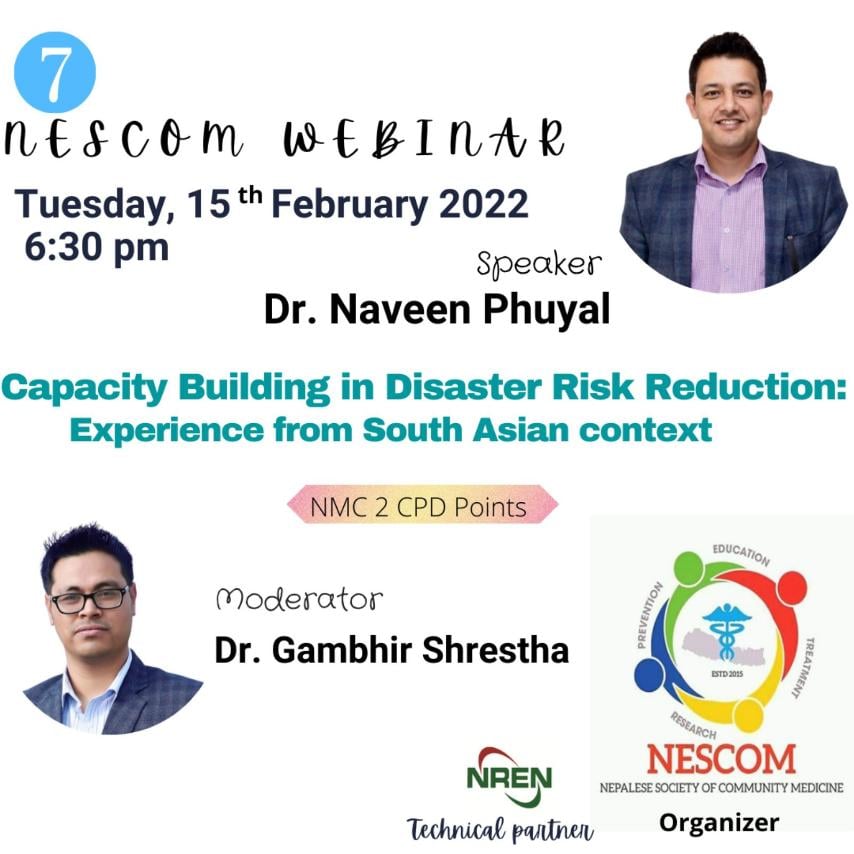
 

7th Webinar Summary Report On “Capacity Building in Disaster Risk Reduction: Experience from the South Asian Context”, Feb 15, 2022

Summary:

The South Asian regions are mostly exposed to earthquakes, landslides, drought, and floods every year rather frequently, and with a comparatively poor economy, the vulnerabilities tend to be elevated. Prevention is the key. Only with proper training in regard to disaster preparedness and management we can decrease the disaster-associated burden in the region; considering the unanticipated nature of disasters. Man-made disasters may be attempted to be prevented, but natural disasters will continue to occur, hence we can only mitigate their effects, and for that capacity building in various dimensions is crucial.

Brief Background:

Dr. Alisha Manandhar, the Master of Ceremony for the webinar, started the program acknowledging the combined efforts of all the team members to make seminar series a success. Eliciting the vulnerabilities of the South Asian region to the various types of disasters, she then went on to highlight the need for capacity building, especially in South Asian Region. Thus, prefacing the topic, Dr. Alisha began introductions of the speaker of the session, Dr. Naveen Phuyal, and the moderator Dr. Gambhir Shrestha.

Dr. Phuyal, who is actively involved in assisting in various natural disasters in the Nation and the International platforms, was an apt person to guide us in understanding the importance of capacity building for mitigating disasters, and Dr. Shrestha, with his broad expertise in different areas of Public Health, was able to conduct the session very smoothly.

Quoting Prof. Eric Noji, “Disasters are defined by what they do to the people otherwise, they are simply an interesting geological or meteorological phenomenon.” Dr. Phuyal gave us the broad strokes of the current reality in a contest of disasters occurring in the South Asian regions and then launched the subject of disaster epidemiology. He has abundant hands-on experience in the field of disaster preparedness, therefore, Dr. Phuyal was able to paint a clear picture regarding the current need in regards to disaster management. He further listed the various ongoing capacity-building activities that are available and ongoing to counteract the upcoming disasters at the National level. Dr. Phyual had a few thought-provoking questions for his polls, which engaged the participants. With these questions, he highlighted the importance of epidemiology of disasters more. Lastly, a brief but fruitful discussion regarding how the rescue activities are coordinated securely ensued, and the matter was expertly addressed by Dr. Phuyal, which bought about the end of the session

Objectives of Webinar:

  1. To understand the disaster epidemiology in the context of the South Asian Region.
  2. To know about the various residential and nonresidential training programs available for capacity building for disaster risk reductions that are currently ongoing in Nepal.

Key points discussed:

Similar natural hazards may affect dissimilar populations differently as per their vulnerability and their level of preparedness.

  1. Though the average cost per natural disaster is less in the South East Asian countries, as compared to the developed countries, with the frequency of disasters and the vulnerabilities in this area, the accumulative yearly cost due to natural disasters will be much higher.
  2. Unplanned urbanization and population growth have led to increased human-induced disasters in the South Asian regions.
  3. Some of the capacity building activities ongoing in Nepal are:

a. Hospital Preparedness for Emergency (HOPE):-

Developed by USAID (U. S. Agency for International Development) / OFDA (Office of the US Foreign Disaster Assistance). It is 4 days residency programme in collaboration with experts from India, Indonesia, Nepal and Philippines. Target populations are Hospital managers, doctors, nurses, HCWs (Health Care Workers) from Sri Lanka, Nepal, India, Pakistan & Afghanistan. It helps to conduct regularly vulnerability assessment of hospital and develop a disaster response plan. In Nepal conducted it was conducted in province 3, 4 ,5 ,6 & 7. It is funding dependent project.

b.  HOPE Training for Instructor Course (HOPE TFI):-

Here participants will be potential HOPE instructors from HOPE courses. It is a 5 days residential training conducted in Nepal and India.

c. Emergency Medical Response Team (EMRT):-

They are Nepal army medical corps under ESOMT (Epidemiological surveillance and outbreak management team), Disaster response and management core.

d.  Emergency Medical Deployment Team (EMDT):-

Physical and virtual training conducted by HEOC (Health Emergency Operation Centre) and MoHP (Ministry of Health and Population) in satellite hospital network. Dr. Phuyal had made SOP (Standard Operating Procedure) of HEOC as a member of technical working group. Had organized trainings, drills, policy and planning for incident command system and disaster store management capacity building at different levels.

e.  Mass Casualty Management (MCM) Review and Update Workshop:-

It reviews and update mass casualty plans under leadership of HEOC. Four days residential training is conducted where Directors, Disaster committees of Hub and Satellite hospitals are targeted. Initially it was started at Kathmandu and later changed to HDPR (Hospital Disaster Preparedness and Response) and extended to other provinces hub and satellite hospitals.

f. Outbreak management plan:-

It is 2 days non-residential training as an extension of HDPR. Screening triage, Epidemic triage, Epidemic emergency unit, Isolation, Donning and Doffing and Contingency are its major outputs.

g. Mass casualty exercise: –

It does natural and human induced outbreak drills and outbreak drills conducted in all provinces of Nepal. It was done in Kathmandu Medical College, Sinamangal and Patan Hospital, Lagankhel.

h.  Disaster Management Awareness Programme (DMAP):-

Done with support from US Embassy and US Office of Defence Cooperation (USODC). Targeted to 3rd year and 4th year Medical and Nursing students to address their deficiency in Disaster knowledge in medical/nursing curriculum. It does orientation and (Basic Life Support) BLS trainings.

i.  Disaster Response Expertise & Exchange (DREE):-

It is multinational exercise including indopacific, regional and country coordination. Largest disaster exercise in Nepal. It tests the frameworks and interoperability.

j. Disaster risk communication Subject Matter Expert Exchange (SMEE):-

It is one-week training on disaster risk communication organized by US PACOM (US Pacific Command) and CDC (Centre for Disease Control and Prevention. Targets are Nepal Army, Nepal Police, Armed Police Force officials from Ministry of Health and Population and Ministry of Home Affairs. Similar training is also given by WHO.

k. Force Health Protection: –

It is doctrine of Health protection in Armed forces. It is supported by US PACOM which deals with preventive, promotive, curative and rehabilitative care for Armed forces.

l. Global Outbreak Alert and Response Network Southeast Asia (GOARN):-

International and collaborative mechanism which engages the resources of technical agencies for rapid identification, confirmation, risk assessment and response to public health emergencies of international importance.

m. COVID 19 Crisis Management Coordination Centre (CCMC):-

It is an agency created to respond to COVID-19 pandemic of Nepal including treatment, management and health infrastructure expansion.

Creating public awareness and information management; formation and operation of quick response teams and emergency transportation; and rescue and arrangement of patient receiving team and corpse management are also operated by CCMC.

n.  Procurement and Supply Management Project (PSM):-

It works on capacity building in supply chain management. Emergency outbreak response platform empowering supply chain professional.

Point for the policy brief:

a. Ministry of Health and Population, Government of Nepal should put the courses of disaster management, prevention in school and college syllabus. Government should advertise about it in radio, TV and newspaper. Capacity building effort for Community Medicine and Public Health graduates are required to mitigate disaster in the country.

b. Government should form technical, competent and responsible team for disaster management which focus on preventive, curative and rehabilitative services. Prevention medicine and public health experts should be utilized to the best of their potential.

Points to be discussed in executive committee:

a. Conducting epidemiological study on disaster by Community Medicine team

b. Capacity building effort of Community Medicine graduates in disaster risk management in terms of research, trainings, workshop, drills at different levels and increase its efficiency

c. Mechanism of coordination, collaboration with public, private and international agencies

Conclusion:

Countries in the South Asian region are in a rather vulnerable position, due to the repeated occurrence of natural disasters and should focus on strengthening their capacity to prepare for any unforeseen disasters. Capacity building activities includes individual training, organizational development, improving functioning of groups within organizations, having standard protocols of operations in place to be used when in need, regular training of personnel and allocation of essential resources. Capacity-building should be an ongoing process as it helps in future mitigation activities.

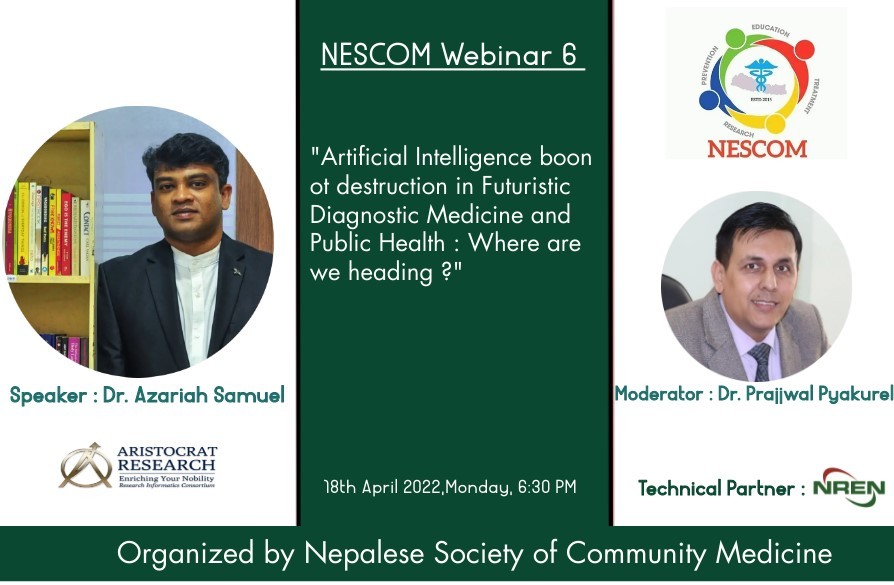
6th Webinar Artificial Intelligence Boon or Destruction? In Futuristic Diagnostic Medicine and Public Health: Where are we heading? 18th April,2022

Summary:

Artificial intelligence (AI) refers to the simulation of human intelligence in machines that are programmed to think like humans and mimic their actions. Artificially intelligent computer systems are used extensively in medical sciences. Common applications include diagnosing patients, end-to-end drug discovery and development, improving communication between physician and patient, transcribing medical documents, such as prescriptions, and remotely treating patients. Recent advances in computational algorithms have achieved levels of accuracy that are at par with human experts in the medical sciences. A few years from now, certain roles in medical science may be completely filled by machines. Furthermore, unprecedented ethical concerns associated with its practice are being addressed, such as data privacy, automation, and representation biases. The purpose of this webinar is to discuss how AI is changing the landscape of medical research and to separate hype from reality.

Brief Background:

The webinar was started by the Master of Ceremony, Dr. Kapil Duwadi, who reminded the audience that this would be a repeat of webinar 6 which had to be rescheduled due to technical difficulties in the previous scheduled date. As the session began, Dr. Kapil introduced speaker of the session Dr. Arun Kumar Annamalai and the moderator of the session Dr Prajjwal Pyakurel.

Dr Arun Kumar is affiliated as non-academic member to the board of studies of the department of French and foreign languages at the university of Madras. He is a linguist with more than 10 years of experience in research in language acquisition and allied sciences. Dr. Arun Kumar is a medical doctor with multidisciplinary expertise in Family medicine, Public health and Epidemiology, Clinical Data Science: machine learning, deep learning, AI, medical devices and robotics operational research in health care, end-to-end knowledge of research and development including trials and regulatory affairs. He is specialist in managing, analyzing and interpreting unstructured clinical data, blockchain technology enthusiast, telepsychiatry and AI in mental health enthusiast. He is an expert in clinical validation of drugs, devices, diagnostic vaccines and informatics developing and deploying advanced clinical decision support systems. He is a published author and keystone speaker. He is a renowned reviewer in reputed Psychiatric journals namely Frontiers in Psychiatry and Indian journal of psychological medicine. Similarly, our moderator Dr. Prajjwal Pyakurel is affiliated with BP Koirala Institute of Health Science, Dharan.He is currently engaged in writing an Atlas on       Tobacco use in Nepal. He is also working as a Research Officer in the SAARC Tuberculosis and HIV/AIDS Centre in Thimi, Bhaktapur. He is an executive member of NESCOM and leads the NESCOM webinar series.

The webinar started with brief introduction about AI and its infiltration in our health sector especially clinical practices, public health and epidemiology. Dr Arun Kumar highlighted about one of the burning questions that he gets in every session i.e. Will AI replace a doctor? To this query he answered it will not replace a doctor but it will bring significant changes in a way clinical practices, Public Health and Epidemiological practices are done. The speaker briefed us about importance of integration between Doctors, Engineers and Algorithm of patient’s data which are the key ingredients to develop an AI. He emphasized about the fact that, for a doctor trying to venture into domain of artificial intelligence one should only have basic knowledge about Mathematics, Statistics, Computers and Programming. You don’t have to be an expert programmer because we always have engineers to collaborate when it comes to advance technique required. He talked about the traits that an AI enthusiast doctors need to know and need not to know. These traits are described below. In this session speaker discusses and gives illustrated presentation on clinical data vs clinical data science, structured data vs unstructured data, clinical decision support system structure, types of CDSS.Speaker also reflected on ideas of building CDSS, fair data, technical validation of CDSS.In the final part of the session he discussed about questions that are to be asked while deploying AI in the field of Public health and Epidemiology. Finally, the session was wrapped up with interactive question and answer session with the participants and speaker. Webinar lasted approximately for an hour.

Objectives of the webinar:

1.To understand AI in health care -What should I know as a doctor and what I do not need to know

2.To understand use of AI in Public Health and Epidemiology by applying Clinical Data Science, Data Standards and Research Data Stewardships-fair principles

3.To have clarity regarding questions to be answered for deploying AI in Public health and Epidemiology

Key points that came out during the discussion:

1.Doctors trying to venture into domain of artificial intelligence don’t need a mastery over highly complex statistical and computational complex

2.Doctors trying to venture into domain of AI should be able to answer following questions:

  1. What is the purpose and the context of Algorithm?
  2. How good were the data used to train the algorithm?
  3. Were there sufficient data used to train the algorithm?
  4. How well does the algorithm perform?
  5. Is the algorithm transferrable to new clinical settings?
  6. Is the output of the algorithm clinically intelligible?
  7. How will this algorithm fit into and complement current workflows?
  8. Has use of algorithm been shown to improve patient care and outcomes?
  9. Could the algorithm cause patient harm?
  10. Does use of algorithm raise ethical, legal and social concerns?

3.A clinical decision support system (CDSS) is an application that analyzes data to help healthcare providers make decisions and improve patient care.

To build a CDSS we need,

  1. Team
  2. Data that includes fair principles and data principles
  3. Analytic use of n-of-1 approach

4.A doctor should be able to answer on following topics for deploying AI in Public health and Epidemiology

  1. Scientific directions
  2. Resource Sharing
  3. Maximization of research potential of existing cohorts
  4. Methods and technologies
  5. Training and work force development
  6. Integration of observational and interventional epidemiology
  7. Evaluation and return on investment

Points for the Policy Brief:

Role of AI is crucial in the current era of information and technology. It can revolutionize the way health care practices in Nepal. Hence, it is important that Ministry of Health and Population, Government of Nepal incorpates the role AI in different programmes and operational research activities so that that health system gets benefitted

Points to be Discussed in Executive Committee:

Digital Health is the burning field in the current era of information and technology. Mechanism of grooming young residents and graduates of Community Medicine in the field of Digital Health is paramount for the subject to be developed in coming years

Conclusion:

The ultimate aim of doctors working with an AI or clinical data science is to create a support system that will enhance our clinical decisions. Our main goal is to reduce no of errors in clinical decisions, public health settings and epidemiology. The only aim is to decrease false positives and false negatives as far as possible

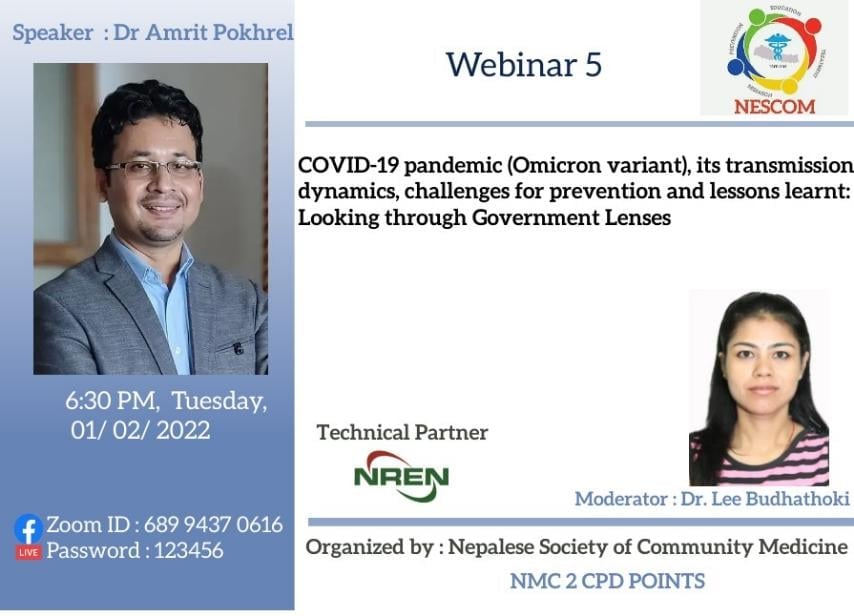
5th Webinar Summary Report on “COVID-19 pandemic (Omicron variant), its transmission dynamics, challenges for prevention and lessons learnt: Looking through the Government Lenses, 2nd Feb 2022

Summary:

COVID 19 is a wakeup call to the world, and has posed various challenges to the health care system, especially due to the continuing emergence of mutation of the virus, hence, it is imperative to build sustainable health emergency preparedness system. Likewise, Nepal has had to face its own share of challenges, which was managed efficiently by the government through leadership and multi-sectoral involvement through joint committees, public/private partnership, involvement of security forces, NGOs/INGOs all working together on a common platform. The need of recruiting experts especially in the field of Public Health and Community Medicine was recognized. However, there are still many challenges in terms of the new emerging variants of the SARS-Cov-2 virus, hence it is important to strengthening co-ordination across all three tiers of the government, increase surveillance for early detection and prompt action, human resource and international community support and private sector involvement

Brief Background:

The proceedings of the webinar was started by the Master of Ceremony, Dr. Pallavi Koirala, who started with the introduction of the speaker Dr. Amrit Pokhrel. Dr. Pokhrel is the Section Chief of the Epidemic and Disease Outbreak section at Epidemiology and Disease Control Division (EDCD) under MoHP and is currently leading the COVID pandemic response including strategy designing, planning and implementation preparedness and response to the ongoing public health emergencies and other outbreak prone diseases. He was also a recipient of the presidential honour for the commendable work during COVID-19. The webinar was moderated by Major Dr. Lee Budhathoki. Dr. Budhathoki is the Associate Professor, in the Department of Community Medicine, in Nepalese Army Institute of Health Sciences and Preventive Medicine specialist for Nepali Army Director General of Medical Services (DGMS) COVID 19 core team and the resource person for various training in research by NAIHS and NHRC. She is also the member of the disaster relief committee and hospital infectious control committee in Shree Birendra Hospital.

The Webinar started with an overview highlighting the current scenario of COVID 19 in Nepal, followed by the initial response of the country in response to the pandemic by adopting a multi-sectoral approach to working together to formulate various preparedness and response strategies including activation of surveillance network and identification of new mutation via contact tracing, establishment of call centres, COVID Crisis Management Center at the provincial and district, Point of Entry (POE) surveillance, hotspot identification and increasing the capacity of gene sequencing through testing. Dr. Pokhrel emphasised on community participation, communication and dissemination of information as one of the key steps in management during the pandemic. He also discussed about the public health impact of the Omicron variant and steps to be taken moving forward on management of the pandemic by the EDCD. He also briefed about the hurdles and challenges faced during the first waves in terms of capacity building, lack of an efficient health desk at the Tribhuvan International Airport (TIA). The missed opportunities in terms of contact tracing and the lack of practicing Public Health and Social Measures (PHSM) which subsequently lead to the surge of cases in the second and third wave. The presentation was concluded with experiences gained and steps in terms of strengthening health preparedness system.

 A 5-question poll was completed and it was followed by an interactive question and answer session. It ended with the summary of the webinar by Dr. Lee. The webinar ended adter approximately 2 hours with 142 participants and the announcement of the 6th NESCOM webinar on “Artificial intelligence in Futuristic Diagnostic Medicine and Public Health” was made.

Objectives of the Webinar:

1.To get an insight on the challenges faced by the government of Nepal for control of the pandemic and the control measures taken

2.To get information on the new Omicron Variant of the SARS-CoV-2 virus on a public health perspective

3.To understand the lessons learnt and formulation of steps to be taken in the future to strengthen the health emergency preparedness system

Key points that came out during the discussion:

1.It is imperative for multi-sectoral engagement for containing the COVID 19 pandemic, which the government has recognized and implemented in its initial strategy of containing the pandemic by forming a committee under the prime minister, establishment of the COVID Crisis Management Center (CMCC) at the Provincial and District level, Incidence Command System (ICS) and activation of the existing Infectious Disease Act(1964) and “Health Cluster lead by the Incidence Command System (ICS) to enable monitoring, discussion and quick decision making on a single platform.

2.For the preparedness and response management of the pandemic EDCD focused on:

Improving surveillance:

Advocating for antigen testing due to its easy access and availability. Expansion of the community testing to all provinces was done by distributing 27, 00,000 testing kits at the local. Testing protocols and were developed and revised with free SMS services to encourage case notification.

Community participation:

Case Investigation and Contact Tracing (CICT) team was established and mobilized at the local level. Advocacy to Palikas for Tole to Tole facilitation group.  Contact tracing was significant in controlling the pandemic including contact tracing guided testing, identification of hotspots and data collection

Strengthening and reestablishment of Point of Entry (POE):

Health desks at the 14 point of entry sites were set up at the TIA and Nepal India border with very efficient screening protocols, testing, examination and treatment of COVID-19. It is now being established as a tool to prevent cross border transmission of diseases.

Revising and formulation of guidelines and Standard Operation Procedure (SOP) and Terms of Reference (ToR):

Timely development and revision of protocols, guidelines and SOPs were done that was easily understood and available for example: pocket book for cases staying in home isolation etc.

Risk Communication and Community Engagement (RCCE):

Creating awareness through the dissemination of correct information to the public was important due to the spread of falsified information which was a hampered the control of the pandemic. Incidence Command System (ICS) was established under the MoH and information was relayed to the public via daily press briefing/reporting, situation report from various websites (HEOC, EDCD), MoHP and viber groups. Call centers served as an important communication platform in managing and identifying suspected cases, following up with the cases, as well as, providing services for mental health problems mainly suicide.

Capacity building of health workers:

The importance of public health expertise was recognized and an additional of 178 public health workers were recruited

Establishment of molecular labs in all districts:

93 PCR labs have been established all over Nepal strengthening the nationwide genomic sequencing surveillance. These PCR labs will continue to be used in the diagnostic tests for other disease

3.The latest SARS-CoV-2 variant prevalent in Nepal is the Omicron lineage BA.2 which is 2.5 times more transmissible and an increased risk of reinfection as compared to the delta variant, despite its reduced severity it could lead to a strain on the health system due to a large number of people getting infected. Prevention is in the key and Public Health and Social Measures including vaccination need to be advocated and followed.

4.Strengthening the health care system and taking into account the lessons learnt from the pandemic is an essential step moving forward to control the pandemic and support livelihood. Adopting a decentralization approach and improving coordination across different tires of the government, increasing human resource capacity, improving information management, logistic and supply chain, health financing are imperative steps to be taken in the near future.

5.The involvement of community medicine department of medical college and community medicine experts in outbreak management was also acknowledged.

Point for Policy brief:

Involve the Medical Colleges/Universities that include residents and faculty of community medicine and public health to use their expertise for outbreak management at the local level. Deploying expertise at the municipality and district level for technical guidance. Advocate for procurement of vaccine for 5-11-year age group.

Conclusion:

The government of Nepal has worked diligently in the management and control of the pandemic and the challenges on the public health posed by it, especially due to the emerging variation of the SARS-Cov-2 virus. Strengthening the emergency health preparedness system via multi-sectoral coordination, community participation, surveillance, communication, practicing PHSM is the most crucial steps to control the pandemic and without the combined effort of the government and the citizens it would not be possible.

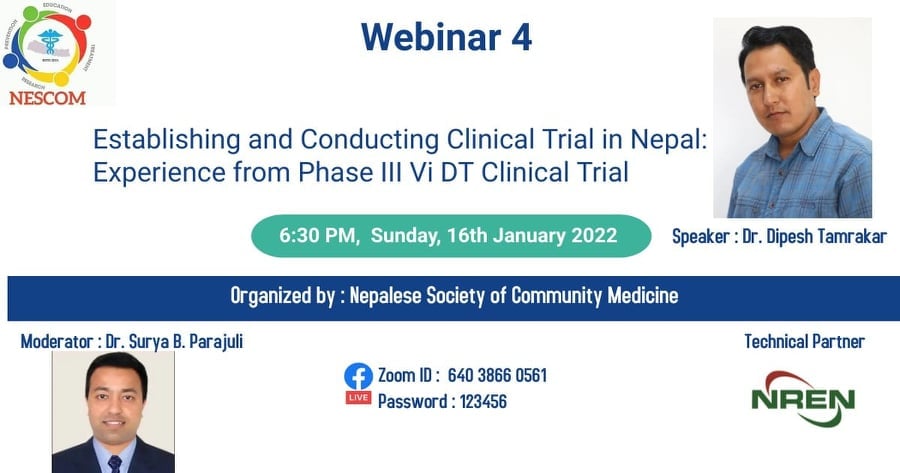
4th Webinar Summary Report on “Establishing and Conducting Clinical Trial in Nepal: Experience from Phase III ViDT Trial”, Jan 16th 2022

Summary:

Clinical trials are a type of experimental/ interventional research study that is proposed to compare new drugs/medicine, vaccine, treatment, procedure or intervention against an existing standard of care. It also examines and evaluates safety and efficacy of different therapies in human subjects by measuring the effectiveness and efficiency for the prevention, control and treatment of disease and improve the health of the community. Ethics are fundamental in any clinical trials and thus informed consent must be obtained from all the participants (cases and control).Historically speaking clinical trial was first reported in 1747 to identify treatment for scurvy. Slowly it has started to built up in Nepal and are getting successful.

Brief Background:

The proceeding of the webinar was started with the introduction of the Master of Ceremony, Dr. Pallavi Koirala. Dr. Pallavi Koirala introduced the speaker of the day who was Dr. Dipesh Tamrakar. Dr. Tamrakar is an Assistant Professor in the Department of Community Medicine, Kathmandu University School of Medical Sciences (KUSMS). He has been working in KUSMUS since > 5 years. He has been an active researcher in KUSMS. He was the principal investigator leading a phase III clinical trial of adjuvant recombinant SARS-COV-2 Protein subunit vaccine and oral cholera vaccine. The webinar was moderated by Dr. Surya B. Parajuli. who is an Assistant Professor of Community Medicine at Birat Medical College and has been actively involved in preventive, research and advocacy activities in eastern Nepal.

The webinar started off with a brief overview of clinical trials. Dr. Tamrakar mentioned about the various development phases of drugs/medicines in a clinical trial along with various types of clinical trials. He shared his experience of conducting the ViDT clinical trial and the challenges faced during its conduction. The completion of the presentation was followed by many interesting questions raised by the participants, making it an immensely interactive session. A zoom poll with 5 questions was also put forward in between discussions. The webinar lasted for nearly about one and half hours with 46 participants and ended with the announcement of an upcoming webinar on “Covid -19 Pandemic (Omicron variant), its transmission, dynamics, challenges for prevention and lessons learnt:  Looking through government Lenses.”

Objectives of the webinar:

1. To learn about the process of conducting a clinical trial in Nepal, challenges faced and mechanism of overcoming it

2. To sensitize the Community Medicine Physicians for the initiation of clinical trial

Key points that came out during the discussion:

1. For the drug /medicine to go to the general population it has to go through various development phases. The phases start with the preclinical phase where it is tested on animals, then it has to go through Phase I, II, III and phase IV trial (post-marketing surveillance). The clinical trials don’t always have to start from Phase I, Phase 2, Phase 3. However, combination designs can also be adopted from the previous studies trials

The clinical trials design is of different types:

a) Trials to show superiority: Designed to show superiority over placebo or active control

b) Trials to show equivalence or non-inferiority: Experimental treatment/vaccine/device is compared with existing treatment without intent to show superiority

c) Bioequivalence trials: Response to two treatments differ by amount which is not important clinically

d) Non –inferiority trials: Experimental treatments with active marketed treatment

Nepal has contributed for about 200 (9.5%) superiority trials of total 2100 in the world

2.He also mentioned about various other trials going on in Nepal, such as “A parallel-group”, Phase III, Multistage, modified double-blind, multi-armed study to assess the efficacy, safety, and immunogenicity of two SARS-CoV-2 Adjuvanted Recombinant Protein Vaccines (monovalent and bivalent) for prevention against COVID-19 in adults 18 years of age and older

It is currently being done on in Dhulikhel Hospital, KUSMS, Nepalgunj Medical College and Institute of Medicine (IOM)

3. Another clinical trial titled “A phase III, Multicenter, Observer-Blinded, Randomized, Active Controlled Trial  to Evaluate Immune Non-Inferiority, Safety and Lot-to-Lot Consistency of oral cholera vaccine- simplified compared to Shanchol in 1 to 40 years old Healthy Nepalese Participants” is going on in Dhulikhel Hospital, KUSMS, Nepalgunj Medical College IOM, and B.P.Koirala Institute of Health Sciences

4. He highlighted about certain steps that have to be followed in conducting a clinical trial, starting with a protocol formation, meeting criteria set by different organization and sponsor requirement and regulatory body

5. Ethics is the center of clinical trials. Thus, ethical consideration from the institutional IRB and the local IRB, patient recruitment and participant consent is paramount. On the parallel side data entry and review, quality check, statistical analysis, presentation and publication of report are done at the end

6. Certain criteria’s have to be fulfilled for evaluation of the site selection, some of which are geographical feasibility, access to well defined population/community, available infrastructure and qualified staff/human resources, regulatory requirements (NRA/Site IRBs) and prior experience(s) with clinical trials/surveillance studies

7. Evaluation of criteria for site selection site must be of interest, support from institution’s higher authorities/leadership/management, available infrastructure, availability of qualified staff / human resources

8. Since the trial was non-licensed various regulatory bodies like WHO PQ, KMFDS, NHRC and DDF’s consultation was done for the ViDT clinical Trial.

9. The team of the trial consisted of co-investigator, clinical research coordinator, pharmacist field worker, field supervisor, field worker, microbiologist, senior advisor, nurse, data operator/phlebotomist, volunteers etc. with principal investigator leading the project

The following things were assured:

1. Preparation of human resource training was done as central training, site specific training, mock drills/dry run and hands on training

2. Proper logistic management including areas separate for pre-screening, consent, physical examination, randomization was properly organized

3. Stakeholder engagement and management, internal faculty meeting, media focal person meeting was conducted in order to clear out doubts and rumors

4. Participant recruitment plan, immunization clinic (vaccination records, follow-up, OPD visit logs, defined catchment area, demographic data etc. was properly managed to maintain the quality compliance

5. The participants were given a diary for record of solicited side effects up to 7 days and unsolicited up to 21 days, serious adverse effects throughout the study period for 6 months

Point for policy brief:

Clinical trial is in the evolving phase in Nepal. Ministry of Health and Population, Government of Nepal along with its various health bodies should create an enabling environment to conduct clinical trial in Nepal. Strong clinical and public health background of Community Medicine graduates should be utilized for smooth operation of clinical trial

Points to be discussed in the executive committee:

1.Role of Nepalese Society of Community Medicine (NESCOM) for capacity building trainings and conduction of clinical trial of community medicine graduates

2.Applying for a grant and develop team work among the NESCOM members to conduct clinical trial in Nepal

Conclusion:

Clinical trials are crucial to gain knowledge and experience which acts as a guide for further research. There are many hurdles in setting clinical trials in Nepal but experiences from trials like “Phase III ViDT typhoid conjugate vaccine trial” can teach and encourage to conduct many more such trials in the coming future.