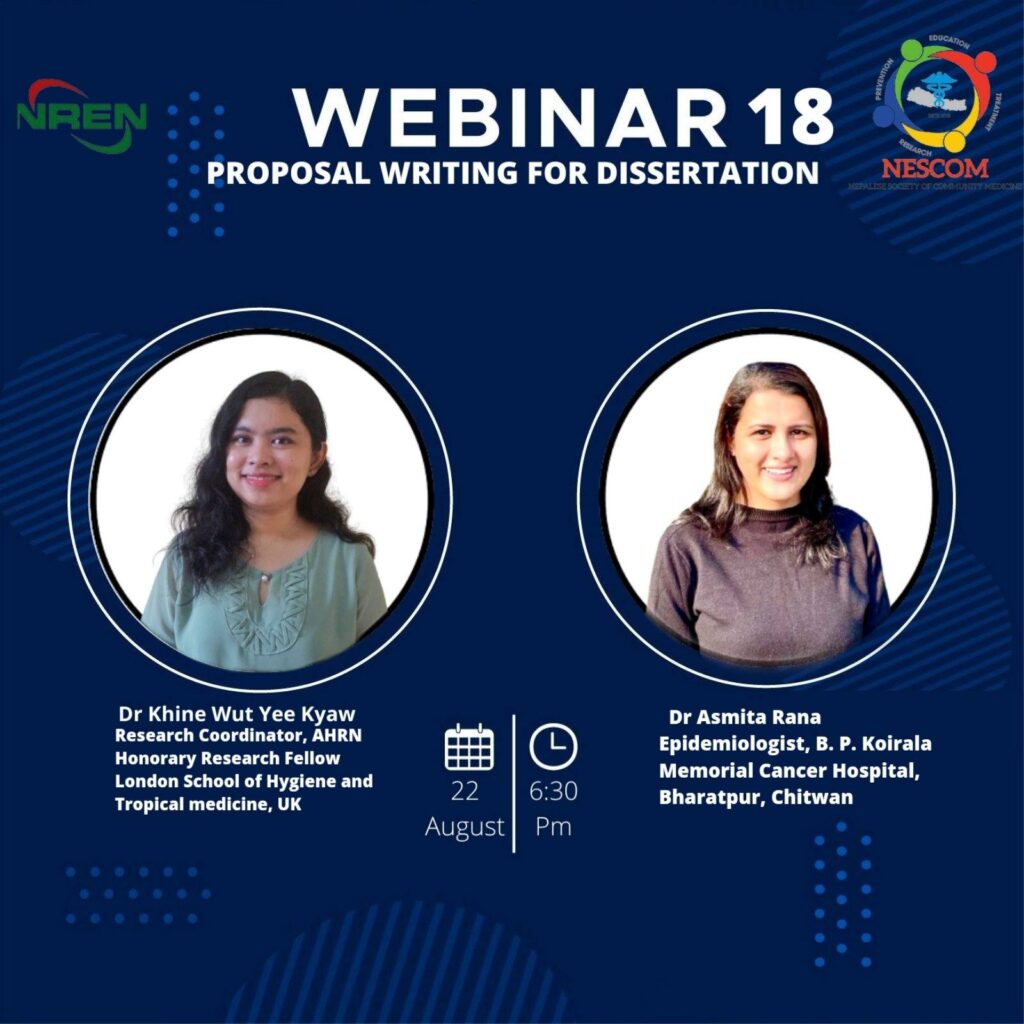
18th Webinar Summary Report on “Proposal Writing for Dissertation” 22nd August, 2022

Summary:

Brief Background:

The webinar started off with the Master of the ceremony, Dr. Sujata Poudel introducing us to the speaker of the webinar Dr. Khine Wut Yee Kyaw, and the moderator Dr. Asmita Rana. Dr. Khine Wut Yee Kyaw is a research coordinator at AHRN (Asian Harm Reduction Network), Myanmar. She is an Honorary research fellow, at the London School of Hygiene and Tropical Medicine, U.K. She is a Public Health Professional and has been working in the field for 10 years. She has experience in operational research for about 5 years and has published thirty articles in peer- reviews international journals. She also has mentored junior researchers from Myanmar and many Asian countries through WHO-TDR-endorsed Structured Operational Research Training Initiative (SORT IT) courses and many more.

Dr. Asmita Rana, the program moderator, is a graduate of MD Community Medicine from the College of Medical Science. She is currently working as an Epidemiologist in B.P Koirala Memorial Cancer Hospital, Bharatpur, Chitwan in the department of cancer prevention, control, and research. She has organized various community-based programs such as Community-based cervical cancer, breast cancer, and oral cancer screening programs, School-based cancer awareness program, and the Planning Human Papillomavirus vaccination pilot project. She is a principal Investigator in the “Delays in Diagnosis and treatment of adult and childhood cancers in Nepal (DECAN projects) IARC/BPKMCH collaboration project.

The Presentation ended with a keynote “Question well asked is a question half answered” the most important part of the proposal writing is to frame a good research question by using FINER technique (Feasible, Interesting, Novel, Ethical, Relevant) if we develop a good research question then we can generate our Aims /objectives and can outline the background accordingly. Depending upon the research question methodology of the study varies. Safeguarding the dignity, rights, safety, and well-being of the research participants should be taken into consideration. The implication of the study will determine whether it will impact the current guidelines, public health prevention, policy, knowledge gap, and theory that can make a potential impact on the country’s health system.

The webinar ended with acknowledgment from the Master of Ceremony. The General Secretary of NESCOM, Dr. Prajjwal Pyakurel presented the speaker Dr. Khine Wut Yee Kyaw with an E –Certificate as a vote of thanks and appreciation from the participants. The webinar lasted about an hour with about eighty participants and ended with an announcement of the next webinar on “Community Based Intervention for Diabetes Prevention in Bharatpur, Chitwan”.

Objectives of the webinar:

  1. To know the process of research proposal writing for thesis and other research purposes
  2. To list the steps of the proposal writing

Key Points Discussed during the webinar:

  1. A proposal is a detailed plan or blueprint for the intended research. A proposal is considered the most rigorous aspect of the research /thesis. There is no single universal format for proposal writing in research. Different institutions and organizations have different formats and conditions for proposals.

         The Structure of a Research Proposal according to Dr. Khine Wut Yee Kyaw consists of the following steps: –

  • Title
  • Background
  • Aims and objectives
  • Method
  • Ethical Consideration
  • Implications and funding
  1. The first step in any research is to identify a research problem, to come up with different ideas, translate those ideas into research and describe what aspects of that you will emphasize. Before selecting a research topic, a few things must be kept in mind, the research should be in the interest of the researcher, feasible to the work, should have resources at hand and meet the ethical concerns
  2. Once the problem is identified, the next step is to collect as much information that is suitable for the research/thesis. Extensive literature review is a fundamental part of the research processes. The main objective of the literature review is to know the existing research and controversies that are relevant to the study
  3. Research question is formulated after the research problem is identified. The research question is formulated on basis of FINER criteria
    • Feasible: Adequate number of study participants, technical experience, affordable time and cost and has a testable hypothesis
    •  Interesting to the investigator: Interesting to the investigator, your peers/ other researchers, journal editors/ reviewers, possible funders, policymakers
    • Novel: Essential pre-requisite for publishing ability. Improving the methodology of previous studies to address previous limitations and obtain more valid findings
    • Ethical: A good Research Question must be ethical; it must be able to approve by your institutional review board.
    • Relevant: Will the study influence practice guideline? Influence health policy? advance scientific knowledge? Guide future research? The research question also must have a frame. How to frame a research question according to PICOT criteria?
    • Populations: Who is the population and what problem is being addressed?
    •  Interventions (or exposures): What is the intervention or exposure?
    •  Comparison: What is the comparison group (if applicable)?
    •  Outcomes: What is the outcome or endpoint?
    •  Time frame: Duration of intervention or a reasonable follow-up time period in which outcome is expected to occur
  1. The research question helps create a research hypothesis. The means in which the question (or hypothesis) is asserted shows what data will be required to answer (or test) it. It also proposes how and from where or from whom the data will be obtained.

      6. Aim: Broad statement of desired outcomes or the general intentions of the research

  • Objective: A clear, concise and specific statement that needs to be accomplished over time period. It focuses on what we are trying to achieve. The  Characteristics of objectives should consist of the following mnemonic SMART.
  • Specific: Describe the outcome in a way that is detailed, focused, and well defined
  • Measurable: Tangible evidence that you have completed the goal
  • Achievable: Attainable or feasible within a reasonable time frame
  • Realistic: Achievable within available resource
  • Time Bound: Should be accomplished within a time frame
  1. Methodology is the most important step of proposal writing and should describe methods utilized to complete the research.  It should take into consideration the following
  • Setting – relevant general and specific settings
  • Study design
  • Population and sample
  • Sample size – if applicable
  • Data collection
  • Data analysis
  • Methodology – Study design. It can be quantitative study design, qualitative study design or mixed-methods study design. Quantitative study is experimental or observational  (descriptive or analytic) cross-sectional, case-control or cohort. In qualitative the researchers in this study design gather and collect what they see, hear,         and read from people and places, from events and activities, with the purpose to learn about the community and generating in-depth understanding. The art of asking “Why?” and “Listening”

 8. The population and sample the following definition of the subject of study and the target population should be clearly spelled out.

  • Target/Reference population : Complete set of people with characteristics of interest. Population to which the investigator hopes to generalize the findings
  • Accessible  population: Geographically /temporally available subset of the target population. Practical representation of the reference population.

      Study Population or Sample Subset of the accessible population enrolled in the study.

 9. Sampling Methods and Sample Size Sampling: The act of drawing a sample from a population so that the sample is representative of the population

10. Data collection: Once the protocol is finalized, the data should be collected. The  data collection will depend on the design of the study.

11. Data analysis: The data analysis is based on objectives, dummy tables/ figures, and leans on previous studies. What to write during data analysis? 

  • First: Descriptive table (mean, median, frequency, proportion, p-value).
  • Second: Analytical table (inferential statistic) 95% Confidence Interval,  regression analysis (Odd’s Ratio, Relative Risk, Hazard Ratio). Figure – flow diagram – mostly used in a cohort study
  1. Ethical Consideration: Must be scientifically justified. An Independent review individual unaffiliated with the research. Respect for persons Opportunity to choose what will/will not happen to them information, comprehension, and voluntariness
  2. Implications and funding: The possible positive/negative, primary/secondary impacts the study will make on the program, public health intervention, clinical practice, policy, future research, knowledge gap, and theory. Hence, the things you need to consider when you prepare the proposal are
  1. Justification
  2. Is there a clearly stated research question and objectives?
  3. What data is required to answer the research questions?
  4. Who are the study participants?
  5. Who will collect the data and how will it be collected?
  6. What are the study procedures? How safe are they?
  7. What will be done with the data?

Points for the policy brief:

  1. Proposal written will be for study on the program, public health interventions, clinical practice, policy, future research, knowledge gap, and theory that can make a potential impact on the country’s health system
  2. Proposal can serve as a vehicle for evidence-based policy to help the concerned stakeholders make decisions and develop appropriate policy initiatives

Hence it is imperative that concerned stakeholders in government sector design appropriate framework to inculcate proposal writing workshop and training regularly in the health system for the academician/researcher of the country

Points to be discussed in the executive committee:

The following points should be considered in the forthcoming Executive Committee:

  1. The capacity building of the residents for creating proposals

for a thesis or any other research.

  1. The regular training regarding the various types of research through webinars

Conclusion:

A research proposal is the basis for the Master’s thesis program and is also necessary for other academic paper writing. Proposal writing is an essential step for conducting research or starting thesis work. The process of proposal writing starts with the intent and outline of a statement of the idea of the study that the researcher works on. The proposal shows the value of the program/project one is working on. Hence it is a necessary step to learn from scholars to write a proposal for a thesis, research, or a project.
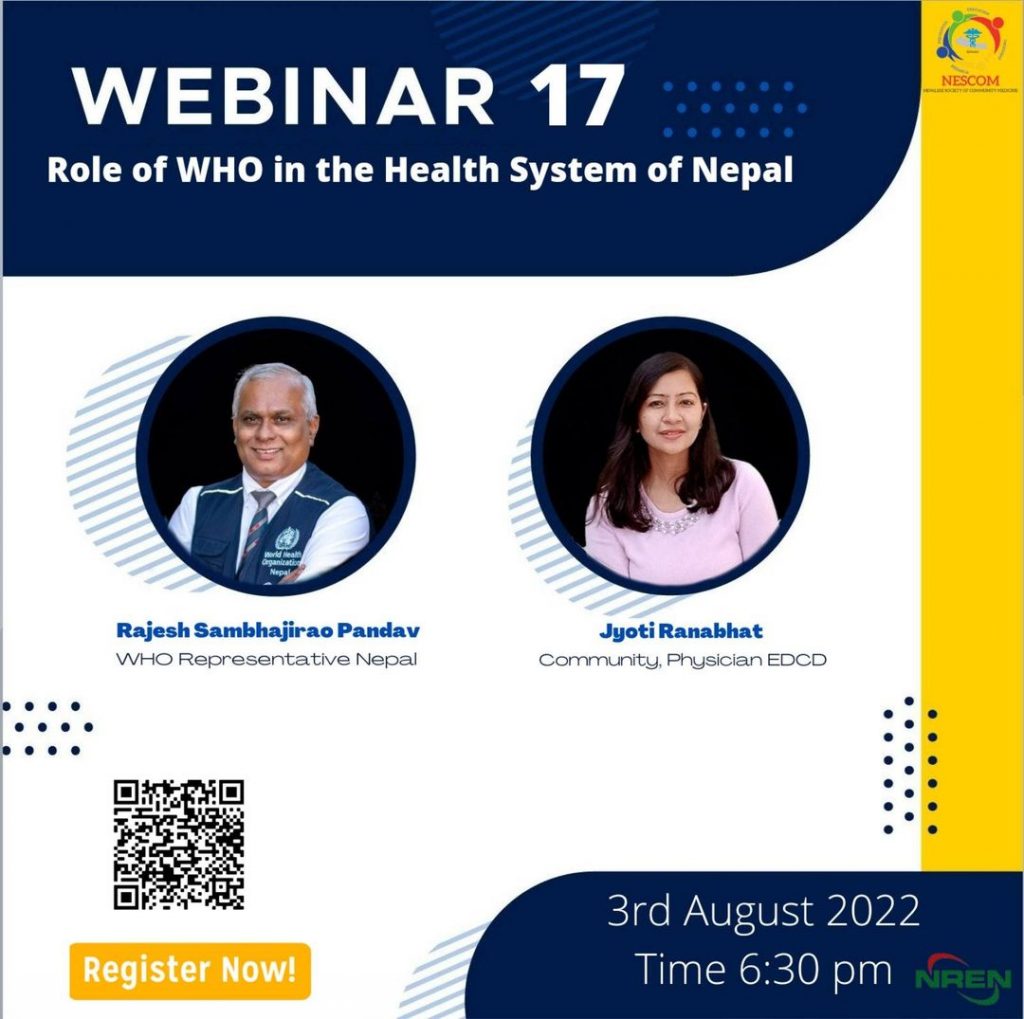
17th webinar summary Report on “Role of WHO in the Health system of Nepal” 3rd August 2022

Summary:

Brief Background:

The proceedings of the webinar was started by Master of ceremony Dr. Baidehi Upadhya where she introduced the speaker Dr. Rajesh Sambhajirao Pandav and the moderator Dr. Jyoti Ranabhat.

Dr. Pandav is the WHO Representative to Federal Democratic Republic of Nepal. He has completed his MPH with major in Epidemiology from: Graduate School of Public Health, University of Pittsburgh, USA. He has previously contributed as a research officer and field coordinator international council for Control of Iodine Deficiency Disorders, New Delhi, India. He has also been awarded with many prestigious awards among which one of the significant awards is WHO director General’s award for excellence to WHO country office Timor-Leste for championing the ‘Walk the Talk’ initiative. He is a guest editor of the journal, International Review of Psychiatry, UK (2006).

Dr. Jyoti Ranabhat, the moderator of the program has recently graduated in MD – Community Medicine and is currently working as a Community Physician in Epidemiology and Disease Control Division, Department of Health services, Kathmandu, Nepal.

Dr. Pandav started the presentation by clearing the misconception that WHO is not an NGO but an international organization governed by its own executive bodies and policy which works with international organizations, foundations, advocates, local government and health workers. WHO has supported Nepal Health system for 60 years. He explained the strategic directions and core functions of WHO and the various program run through it. The motto of WHO at a glance “we deliver real-world impact to build healthier, safer world -” was highlighted by Dr. Pandav.

At the end of the presentation interesting zoom poll questions were welcomed focusing on understanding of the topic which the speaker answered with excellent, clarity and precision.

The webinar lasted for 1 hr. and 37 minutes, and at the end of the webinar session,  on behalf of the Nepalese Society of Community Medicine (NESCOM) a certificate of appreciation was presented to Dr. Pandav. Around 90 participants were present during the webinar. The webinar ended with the concluding remarks by Dr. Baidehi Upadhya (MC for the program) along with the announcement of the upcoming webinar on Proposal writing on 20th August, 2022

Objectives:

  1. To understand the role of WHO in the health system of Nepal
  2. To know the target and impact by 2023
  3. To know the functioning and structure of WHO

Key points that came up during the discussion:

  1. International work done in collective for cholera epidemics in 1830 and 1834. The first international sanitary conference was convened in Paris in 1851
  2. Establishment of WHO after World War ll, 1945
  3. First world health assembly met in Geneva in the summer of 1948
  4. WHO’s constitution came into force in April 1945
  5. It has a functioning body which consist of 194 member states, six regions, a secretariat, an executive board and world health assembly which is the supreme decision taking body
  6. The world health assembly meets every year
  7. Major contributors of WHO budget (about 80%) are funded by the Member states, Volunteer contribution, UN agency, Philanthropist and other sources
  8. The main goal of WHO is the attainment by all people of the highest possible level of health
  9. They have developed a corporate strategy, which comprises of four strategic directions and six core functions which guides its work
  10. WHO at glance:
  • Promotes health, keeps the world safe, and serves the vulnerable
  • Puts science to work
  • Responds to health emergencies
  • Expands health coverage
  • Promotes healthier lives
  • Mobilizes every part of society to advance health and security of all

Four strategic directions are:

  • Reducing excess mortality, morbidity and disability
  • Promoting healthy lifestyles and reducing risks factors to human health
  • Developing health systems that equitably improve health outcomes
  • Responding to people’s legitimate with demands and are financially fair

Six core functions are:

  • Providing leadership on global health matters
  • Shaping the health research agenda
  • Setting norms and standards
  • Articulating evidence-based policy options
  • Providing technical support to countries
  • Monitoring and assessing health trends

Triple billion targets by 2023 consists of:

  • People benefit from universal health coverage
  • Better protected from health emergencies
  • Better health and well-being

WHO mainly focuses on primary health care to improve access to quality essential services and the key areas of strategic focus are:

  • Re-think preparedness, readiness and bolstering response, capacities to health emergencies
  • Build resilience through primary healthcare-oriented HSS and health security nexus
  • Advance WHO’s leadership in science and data
  • Get back on track and accelerate towards the SDGs

WHO representative to Nepal administration support to Central:

  • Health system strengthening
  • Communicable disease
  • WHO Health Emergencies
  • Immunization preventable disease
  • Non communicable diseases

Hence, WHO works only at the federal level. Due to request from Health Ministry of Nepal it has provided support to the province:

  • Provincial Health officer
  • Surveillance medical officers
  • Field medical officers
  • NCD and mental health officers
  • Provincial sexual and reproductive officer

They also provide with:

  • Advancing universal health coverage
  • Effective delivery of priority public health programs
  • Enhances health security, disaster preparedness and response
  • Multi-sectoral engagement and partnerships for improved health outcomes

Points for the Policy brief:

WHO has been an immense contributor for the development of health system in Nepal. However, there is still a need of strengthening capacity in provincial and local level in different areas for better public health intervention which must be done for better functioning of health system

Point to be discussed in Executive Committee:

Role of Nepalese society of Community Medicine (NESCOM) in organizing interactive sessions for better understanding of WHO impact in Nepal’s health sector.

Conclusion:

WHO has been supporting health system of Nepal for 60 years. It has been an immense help in strengthening the health sector and capacity building of developing countries. It has been the main force of action around the globe in elimination and eradication of high impact communicable diseases, control of epidemics, pandemics or an outbreak of new diseases, vaccination and many more programs. It supports, targets, protects and serves the most vulnerable ones. It needs to strengthen the capacity planning and funding at municipal level for public health interventions as well as building a strong border collaboration policy to keep track of diseases since Nepal needs to eliminate many diseases.

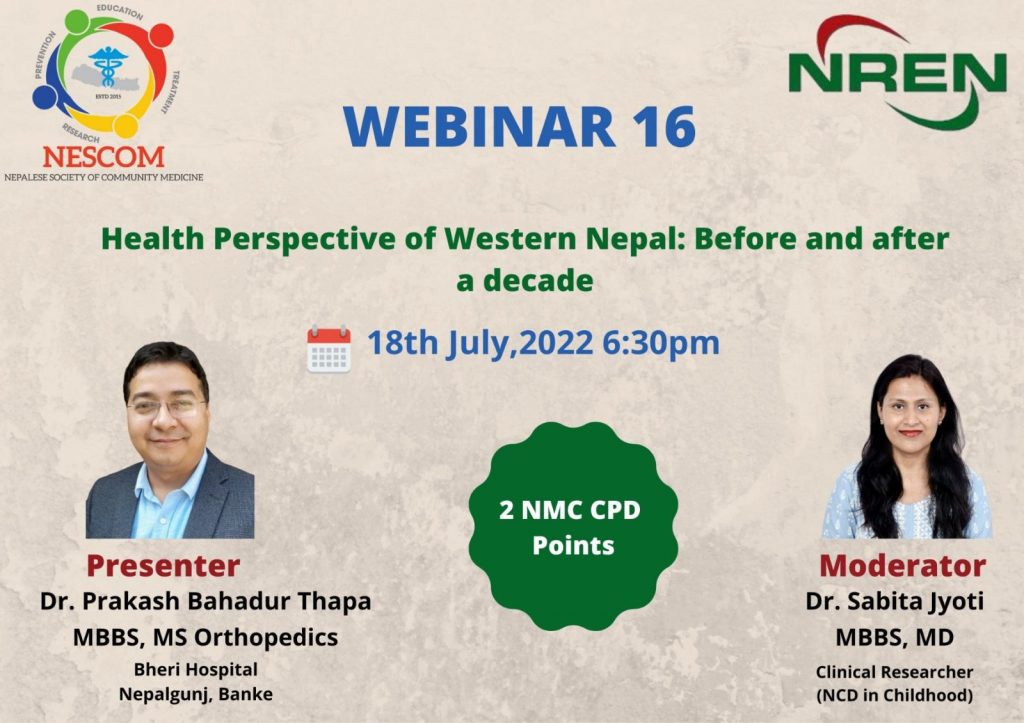
16th Webinar Summary Report on “Health Perspective of Western Nepal: Before and after a decade” 18th July, 2022

Summary:

Brief Background:

The master of ceremony – Dr. Achyut Neupane started the proceedings of the webinar by introducing the speaker, Dr. Prakash Bahadur Thapa, and the moderator, Dr. Sabita Jyoti.  Dr. Thapa is currently working as an orthopedic surgeon in Bheri Hospital, Nepalgunj, Banke. He has completed a short-term fellowship in the spine from the Indian Spinal Injuries Centre, New Delhi, India. He has won a national award for best social contribution to the care and treatment of people living with HIV/AIDS in the far-western region of Nepal. Furthermore, Dr. Thapa was felicitated by the President of Nepal with the prestigious award, the Prabal Janasewa Shri (Chaturtha) Padak.  He also received Barbara Foundation COVID-19 Special Award 2021.

Dr. Sabita Jyoti, the moderator of the program has recently graduated in MD community Medicine and is currently working as a clinical researcher (NCDI in childhood). Her field of interest is NCD (non-communicable diseases), maternal and child health, and infectious diseases.

Dr. Thapa started the presentation by briefing about Bheri hospital which serves as a major service provider for the people of provinces 5,6 & 7 (western Nepal). He highlighted the major problems related to inadequate health services in western Nepal. He shared the challenges faced during the COVID-19 pandemic and further informed about the establishment of health infrastructures such as PCR labs & COVID-19 help desks, local production of PPEs (Personal Protection Equipment), etc. Finally, Dr. Thapa addressed the areas that can be improved and policies that can be formulated to bring a positive change in health facilities in western Nepal.

The webinar lasted for 1 hour and 20 mins. On behalf of the Nepalese Society of Community Medicine (NESCOM), a certificate of appreciation was presented following the insightful presentation by Dr. Thapa. Around 80 participants were present during the webinar. The webinar ended with the concluding remarks by Dr. Prajjwal Pyakurel along with the announcement of the upcoming NESCOM webinar on “Vector-borne diseases and climate change” on 8th August 2022.

Objectives of the Webinar:

  1. To understand the health perspective of western Nepal: before and after a decade.
  2. To identify the major problems related to the inaccessibility of health facilities in western Nepal.
  3. To identify the major health issues that are prevalent in western Nepal.
  4. To share the health infrastructure establishment during a pandemic in the western part of Nepal.
  5. To update on the strategies being conducted & different policies needed to improve health services in western Nepal.

Key Points Discussed during the webinar:

  1. The coverage of Western Nepal includes three provinces namely provinces 5,6 and 7.
  2. The main reasons for the inaccessibility of health facilities in western Nepal are:
  • The distance between health facilities and the community
  • Lack of accessible roads in the provinces 6 & 7
  • Poverty & illiteracy
  • More prone to natural calamities
  1. Bheri hospital which is located in Nepalgunj, Banke is one of the major service providers for the people of provinces 5,6 & 7. It was established in 1947 BS as Prithvi Bir Hospital Dispensary. Currently, 350 beds are functional and it is in the process of being established as a 500 bedded specialized hospital. The specialized services include Cath lab, neurosurgery, dialysis, spine surgery, sports medicine, and arthroplasty treatment for sickle cell disease. Similarly, free health services are also provided by the hospital which include a Short-term Stay Unit (SSU), One-stop Crisis Management Center (OCMC), geriatric, sickle cell diseases, safe motherhood, safe abortion, family planning, and vaccination, and emergency health services for the non-affordable group. Cancer, cardiac diseases, renal failure, alzheimer’s disease, parkinson’s disease, head and spinal injury, sickle cell anemia, and stroke are covered under this program.
  2. During the COVID-19 pandemic, the local production of Personal Protective Equipment (PPEs), establishing PCR labs, fever clinics, and COVID-19 help desks were established to face the challenges. The patients were also kept in observation preparing a temporary shelter (tent) within the hospital. Sushil Koirala Prakhar cancer hospital in Khajura which was under construction was also utilized due to the overflow of patients. During the 2nd wave of COVID-19, the oxygen supply was limited, therefore, a liquid oxygen tank was built to meet the demand for oxygen.
  3. The main health issue of western Nepal is neglected trauma. The other issues are spinal cord injury, snakebite, HIV/AIDS, sickle cell anemia, fall injuries, and maternal and neonatal mortality.
  4. Sickle cell anemia is considered one of the major health problems. The prevalence of the disease is common in the Tharu community. More than 99% of the Tharu community had issues of sickle cell anemia. So, awareness regarding sickle cell anemia has been included in the textbook of classes 7 and 8. Along with Sickle cell anemia; Thalassemia is also common in the Tharu community.
  5. Non-Communicable diseases (NCDs) are a leading cause of morbidity and premature mortality in the world. Globally, 15 million people die prematurely due to NCDs annually and over 85% of these deaths occur in low and middle-income countries. World Health Organization (WHO) has identified NCDs as a major public health problem. NCDs pose a challenge in achieving the Sustainable Development Goals 2030 of reducing premature NCD-related mortality by one-third.
  6. Nepal PEN program: The Package of Essential Non-Communicable Diseases Program (PEN) was developed on a risk-based approach to be implemented in a low-resource setting in the Primary Health Care model.
  7. Multi-Sectoral Action Plan II (2021-2025):
  • Goal: To reduce the burden of NCDs throughout Nepal.
  • Objectives:
  • To reduce risk factors for NCDs and address underlying social determinants.
  • To raise priority accorded to the prevention and control of NCDs in the national agenda policies, and programs.
  • To strengthen national capacity and governance to lead multi-sectoral action and partnership across sectors for the prevention and control of NCDs.
  • To establish an NCD surveillance, monitoring, and evaluation system for evidence-based policies and programs.
  • To strengthen health systems through the provision of people-centric, comprehensive, integrated, and equitable care for improved prevention and control of NCDs.
  1. Road Traffic Accidents (RTAs) are the leading cause of death for children and young adults aged 5-29 years. About 93% of all fatalities occur in low & middle-income countries. Approximately, 1.3 million people die each year in Nepal. More than half of all RTA deaths are among vulnerable road users.
  2. Globally, fall injuries are the second leading cause of unintentional injuries and death, after RTA. 80% of these fall injuries are in low- and middle-income countries. Each year an estimated 684,000 individuals die from fall injuries. Most of the cases of injuries occur in the adult age group of more than 60. 37.3 million fall injuries require medical attention each year. Prevention strategies should emphasize education, training, creating safer environments, prioritizing fall-related research, and establishing effective policies to reduce risk.
  3. Mental health is one of the prime subjects for the sustainable development of any community. Suicide is the fourth leading cause of death among 15-29-year-old. People with severe mental health issues die prematurely whereas the treatment for mental health issues is non-existent in our society. Therefore, community-based mental health care should be provided through a network of interrelated services.
  4. Due to federalism, the government has 3 tiers of health institutions. The services at the provincial and local levels are efficient due to the decentralization process which has increased the accessibility of health services.
  5. Health Insurance Program was started by the Government of Nepal aiming to provide quality health care services without placing a financial burden on them. Initially, it was under the social health development committee (2072/73). Now, it is under Health Insurance Board (HIB) guided by the health insurance act/regulation.
  6. Health insurance program was not effectively implemented because of the following reasons:
  • Low awareness among community people about health insurance.
  • Inadequate enrollment assistant at ward level.
  • High turnover of enrollment assessment.
  • Irrational referral system by first service point.
  • Inadequate medical equipment, materials & human resources at the service points.
  • Unavailability of services and medicines from health institutions & hospital pharmacy.
  • Limited district covered by ultra-poor registration (only 26 districts).
  1. The challenges faced in health sectors are:
  • Less allocation of budget in the health sector.
  • Lack of infrastructure, equipment, and instruments.
  • Political instability.
  • Lack of disability-friendly physical structures.
  • Health insurance program not running smoothly.
  • Lack of proper data management.

Points for the Policy Brief:

The government of Nepal should implement the health insurance program more effectively and reach the rural populations as well. The government should also work on the health system strengthening such as budget allocation, adequate infrastructure, equipment, and human resources.

Points to be Discussed in Executive Committee:

The following points should be considered in the forthcoming Executive Committee:

  • The capacity building of the residents for providing awareness about the health insurance program.
  • The regular training regarding the policy and regulations should be shared through webinars. This could help the residents to remain updated regarding the policies.

Conclusion:

There are multiple issues regarding health in western Nepal. However, prime issues such as sickle cell anemia in the Tharu community and fall injuries are prevalent and it is preventable. Therefore, there should be an awareness program focusing on these issues to decrease the burden of diseases in our country. Furthermore, health insurance programs should be effectively implemented and reach rural areas. PEN programs should be enforced more competently to minimize the burden of NCDs.

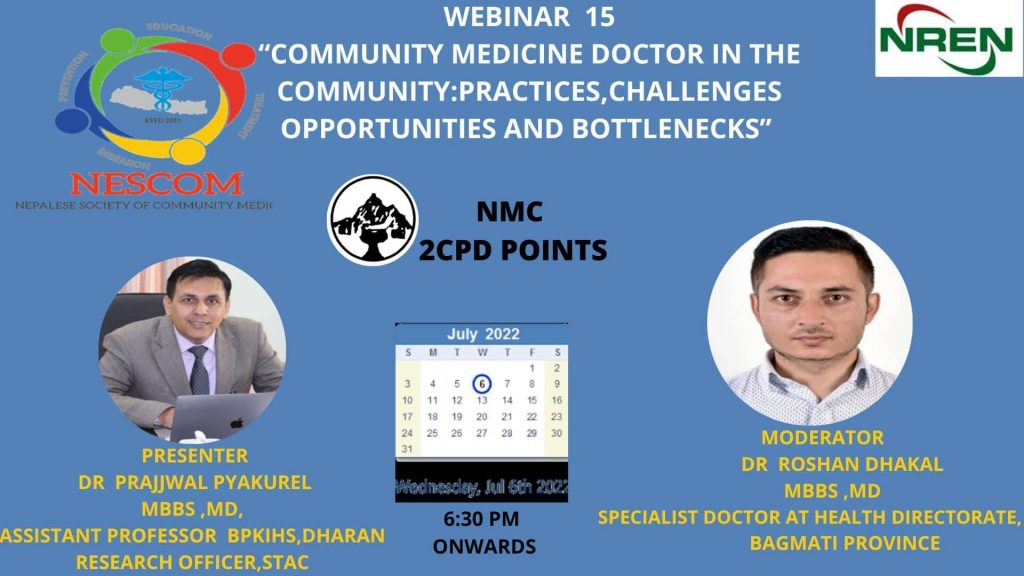
15th Webinar Summary Report on “Community Medicine Doctor in the Community: Practices, Challenges, Opportunities and Bottlenecks”, 6th July, 2022

Summary

Brief Background

The Master of the ceremony, Dr. Bishal Sharma initiated the webinar with the introduction of the speaker Dr. Prajjwal Pyakurel and the moderator Dr. Roshan Dhakal.Dr. Prajjwal is an Assistant Professor at School of Public Health and Community Medicine, B. P. Koirala Institute of Health Sciences (BPKIHS), Dharan, Nepal and is currently writing a book called “Atlas of Tobacco in Nepal”. He is also working as a Research Officer in SAARC Tuberculosis and HIV center, Thimi Bhaktapur Nepal. He obtained his MBBS and MD in Community Medicine and Tropical Diseases from B.P. Koirala Institute of Health Sciences (BPKIHS), Dharan, Nepal. He is the visiting Lown Scholar for the Cardiovascular Health Program at Harvard T.H.CHAN School of Public Health, Boston, MA, USA. He is also the Co-investigator for a project on “Translational Research Capacity Building Initiative to address Cardiovascular Disease in Nepal” funded by the National, Heart, Lung and Blood Institute, USA. He is a senior facilitator for the Structured Operational Research and Training Initiative (SORT IT) led by the TDR, the UNICEF/UNDP/World Bank/WHO special program for Research and training in Tropical Diseases. He has more than 30 publications in various national and international journals. His research interest includes cardiovascular diseases, COVID-19, TB, HIV, and the Health system. Dr. Roshan Dhakal obtained his MBBS degree from Xuzhou Medical College, China. He completed his MD in Community Medicine and Tropical Diseases from BPKIHS Dharan, Nepal. He is currently working as a Health Specialist Doctor at Health Directorate, Bagmati Province, Nepal. He has actively participated and conducted various health promotion programs and health camps, health education, and promotion activities at the community level.

Dr. Dhakal pointed out the unique nature of Community Medicine associating its clinical practice with the community health perspective at the beginning of his session. He mentioned delivering comprehensive health care to the community with different levels of involvement in clinical care as one of the major responsibilities of a community physician. He also focused on the role of the community physician in coordinating with other services/specialties as a manager to implement prevention programs, perform community health needs assessments, and in advocating for health-promoting policies. The speaker of the session, Dr. Prajjwal, began with defining Community Medicine and its scope emphasizing the need by countries to formulate their own definition of Community Medicine in light of its traditions, geography, and resources as the final goal to meet the definition of health. He then cited examples from Christian Medical College, Vellore, All India Institute of Medical Sciences (AIIMS), New Delhi and BPKIHS, Dharan to list different scopes and fields of health services, ranging from teaching-learning activities to providing primary health care and coordination, communication and referral. In the end he discussed various national and international opportunities for a community physician with their associated challenges.

The presentation was wrapped up with thanking note from the Master of Ceremony of the Program. The webinar lasted for about 1 and half hours with about 70 participants and ended with the announcement of an upcoming webinar on “Health Perspective of Western Nepal: Before and after a decade”.

Objective:

  1. To understand the historical development of Community Medicine as a branch in the field of preventive and social medicine
  2. To compare and contrast between Community Medicine, Family Medicine, Emergency Medicine and Public Health with relevant examples from Nepal and India
  3. To discuss and distinguish the future direction of the Community Medicine fraternity; Community based clinician and Public health specialist.
  4. To discuss the importance, opportunities, challenges, and bottle-necks to the success of Community Medicine.

Key points that came out during the discussion:

  1. Community medicine is the specialty that deals with the population comprising of doctors who try to measure the needs of both sick and well people, plan and administer services to meet those needs, and engage in research and teaching in the field.
  2. Every country needs to formulate its own definition of Community Medicine in light of its traditions, geography, and resources.
  3. The Community Health Department in different medical colleges has developed different scopes and fields of health services, ranging from teaching-learning activities to providing primary health care to rural, urban, and tribal communities. The department provides training ground for medical, nursing, and paramedical students.
    1. Services provided in Christian Medical College, Vellore
      • Care centers for the elderly
      • Basic medical services
      • Occupational Therapy
      • Health Education
      • Nutritional Support and Counselling
      • Reproductive Health
      • Family Life Education in the adolescent health program
    2. Services provided in All India Institute of Medical Sciences (AIIMS)
      • Urban Health Center
        • General OPD Services
        • Free Medicine
        • ANC Services
        • Immunization Services
        • Referral Services
        • Lab Services
        • Health Talks/Exhibition
        • Street Play
      • Rural Health Center
        • Outpatient services
        • In-patient services
        • Emergency services
        • Surgical services
        • Laboratory services
        • Radiological services
        • Blood storage services
        • Telemedicine services
        • Pantry services
        • Medical social services
        • Counselling center
        • Ambulance services
    3. Services provided previously from BPKIHS Dharan, Comprehensive Health Service Area (COHSA)
      • Doctors Run Clinic
      • School Health Programme
      • Guiding the students of Netherland and Switzerland as part of their community field activities
      • Epidemiological Skills and Management (EPIDMAN)
      • Training programme of District Health Office
      • Training and Evaluation of undergraduate and Postgraduate students of BPKIHS
      • Occupational Health Programme
    4. At present Kathmandu University and BPKIHS has specialization in Community Medicine and Tribhuvan University is on the way of the establishment of community medicine department.
      1. Curriculum of BPKIHS
        • Physician for Tropical Disease at all level of Health Care
        • Researcher and Epidemiologist
        • Health Planner, Organizer, Administrator and Manager
        • Teacher and Trainer
      2. Curriculum of Kathmandu University
        • Community Physician
        • Public Health Planner
        • Health Manager
        • Administrator
        • Researcher
        • Epidemiologist
        • Teacher/Trainer
    5. Oppourtinities
      1. Role as a Community Physician in Primary Health Care
      2. Teaching learning and research opportunities in academic universities
    6. Challenges
      1. Goals: Lack of proper idea about goals of the subject/field in initial days of a career as Community Physician
      2. Leadership: Community Physicians working under public health experts rather than taking the leadership by own
      3. Human Resources (Trainee vs Students vs Staffs) with different interests
      4. Administrative Barrier (Ownership of a project, Power, Money (“2Ps”), Legality, Polices ):
      5. Managerial Challenges : Role and nature of leadership
      6. Support system: Mentorship, training
      7. Competing priorities: Family life vs professional growth
      8. Ethics and Morale
      9. Human Psychology ( Jealousy, Humiliation, Torture, Suppression, Victimization, Indirect way of saying)
      10. Institutionalization
      11. National vs International

Points for the policy brief:

Currently there is no assigned position in the Public Service Commission, Government of Nepal, for Community Physicians. Government hospitals doesn’t have Community Medicine department. Advocacy is needed at different levels to develop policies to establish such positions in the government sector in order to enhance the opportunities and deliver services to the needy ones at the Community Level inside Nepal by the Community Physicians.

Points to be discussed in the executive committee:

  1. Advocacy by Nepalese Society of Community Medicine (NESCOM) to discuss the importance of Community Medicine doctors in Public Service Commission to create a post relevant to the subject.
  2. To explore the possibilities for job opportunities in national and international organizations for Community Medicine Doctors.

Conclusion:

Community physicians in Nepal are mainly limited in Medical Colleges and Academies being involved in teaching, learning and research activities. There is limited opportunities in government service. Advocacy to setup more job opportunities as a Community Physician in government sector is needed at the moment.

14th Webinar Summary Report on “Grant Writing in Academia”, 15th June, 2022

Summary

Brief Background

The proceedings of the webinar was started by Master of Ceremony, Dr. Megha Joshi where she introduced the speaker Dr. Pushpanjali Adhikari and the moderator Dr. Mona Sharma.Dr Adhikari is the Executive Committee member of Nepalese Society of Community Medicine (NESCOM). She is currently the project lead of several international collaborative projects mostly on Non-Communicable Diseases.  Dr Adhikari is the lead of a clinical trial on Rheumatic Heart Disease. She is co-investigator in other clinical trials in collaboration with International Vaccine Institute/Bill and Melinda Foundation and Sanofi Pasteur. She has an experience of writing several international grants namely MRC UK, NORAD, NORPART, NIH, NIHR, UKRI, ERAMUS, GACD, GCRF and had worked as a project lead/manager for NIH and GCRF grants. Dr Sharma who was the moderator of the program, is currently working as QI specialist in FHI 360 Nepal for USAID, MPHD Nepal Project. She is Peer Reviewer in Birat Journal of Health Sciences & Annapurna Journal of Health Sciences and expertise in Quality Improvement Family Planning. She was Former Master Trainer in Family planning service. She is life member and executive member of NESCOM.

The session started with quote by Norm Braverman, NIH that says, “There is no grantsmanship that will turn a bad idea into a good one, but there are many ways to disguise a good idea”. Dr. Adhikari gave a brief overview of what is meant by grant, more on practical aspects, regarding why we need it, what is it, where do we find grant opportunities and how do we find grants. She enlightened us about the process of grant writing, which starts from ideas/team/activities, bringing them together along with learning writing requirement, which included decision tree for grant pre-assessment, checklists before starting to write followed by identifying potentials and allocating dedicated times for grant writing. She gave us insight regarding steps before going for full proposal, general format of grant writing (which may differ according to organization) along with developing strong research plan. Special focus was given in significance, specific aims, innovations and grant proposal budgets topics of grant writing. She also highlighted the common reasons of a weak application and reason for proposal fail followed by hallmarks of outstanding grants. On ending note she highlighted on general grant writing tips, tips for the junior investigator and things to do after getting grants were mentioned.

The completion of the presentation was followed by many interesting questions raised by the participants, making it an immensely interactive session. A zoom poll with 5 questions was also put forward after the end of discussions. The webinar lasted for one and half hours. Dr. Adhikari was presented with the certificate of appreciation on behalf of NESCOM. Around 100 participants were present during the webinar.

Objective

  1. To understand the importance of grant writing in academia
  2. To understand the process and the steps of grant writing
  3. To understand the format of grant writing for different donor bodies

Key points that came out during the discussion

1. Grant is seeking resources to support ideas which we need to conduct research to bring scientific benefit to the community, establish teams (both intra and inter disciplinary) and support infrastructures which may include adding or upgrading equipment to facilities. Example includes research grant, program/project grants, planning grants and infrastructure support grants

2. Grant opportunities can be found in government, dedicated organization, philanthropic entities, individuals, and universities via targeted search, email/newsletters, contacts, or networks

3. Grant writing starts with idea (lot of ideas) after which a team must be build (initiate oneself and bring others in the team/be a part of another person’s team) followed by different activities to execute the ideas

4. Writing requirements include creating a list of ideas, identifying potential collaborators, opportunities, creating team and allocating dedicated time

5. Whenever we think to start writing a grant, we should follow a decision tree for grant pre-assessment. We should see whether the proposal is in harmony with the personal and professional goals and meets with the philosophy and goals of agency.

a. If yes, we should see whether the project can be accomplished without hindering the goals, direction and function of the agency, chances of the proposal being funded good enough that it is worth our time and effort and being entirely honest with our self and our agency.
b. If no, it is necessary to reevaluate our project in accordance with our resources, philosophies and goals

6. Process of grant writing starts with letter of intent, followed by pre-proposal and then the full proposal
7. Letter of intent is usually of 2–4 pages and it highlights what we want to do and informs funding agency that we intend to submit- often get back no response other than an acknowledgment

8. Pre-proposal is about 5 pages which is reviewed by panels of reviewer and once approved is then invited to submit the full proposal

9. Full proposal is 10-40 pages which includes forms, attachments and specific formats

10. General format of grant writing differs according to organizations where applied

11. Format of grants include cover letter, executive summary, need statement, goals, and objectives; methods, strategies or program design; evaluation section, funding and sustainability portion, information about organization and project budget

12. Writing tips: Plan ahead (about 6 months pilot work + research questions, involving mentor/co investigators), write and revise a 1-2 pages concept note (share ahead of every meeting, revise between meetings) which may become specific aims section later on

13. Developing a strong research plan is utmost where methods and analyses must match and includes questions like

a) Does your plan flow logically from the literature review and prior studies?
b) How will each hypothesis be tested?
c) Do your measures capture the variables needed to test the hypotheses?
d) Why did you choose those measures?

14. Significance section of grant writing shows overall understanding of the field, demonstrates that the questions are novel, important, and represent a logical step in research and highlights critical gaps that will be addressed by the proposed research. It also explains the importance of the problem or critical barrier to progress in the field that the proposed project addresses, explains how proposed project will improve scientific knowledge, technical capability, and/or clinical practice in one or more broad fields; describe how the concepts, methods, technologies, treatment, services, or field will be changed if the proposed aims are to be achieved

15. Specific aims of grant writing should grab the reader immediately, it should be the roadmap of the applications and the aims should be to organize it in sequential, numeric format. It should begin with a general purpose of the research with some key supporting data, hypothesis, and long-term objectives and expected future impact. It should also tell reviewers what the project will add on.

16. Grant writing should also show that the proposed research is innovative by showing how it refines, improves, or proposes a new application of an existing concept

17. Tips to draft a compelling budget (direct and indirect) for grant proposal focus on uniqueness of study essentials, funding agency guidelines, categorization of each item, value of money, including expenses and revenue. However, one shouldn’t overestimate the budget

18. Grant review focus should be in the overall impact of an application

19. Summary part of the proposal should be able to answer following questions

a) Has the rationale been stated clearly and convincingly? Does the submitting agency indicate awareness of the problem? Is the proposal restricted or natural?
b) Have the objectives been specified operationally and in sufficient detail? Are they feasible? To what extent can the program be expected to oversell? Are they guided by religious, unrealistic hopes?
c) What is the relationship of this proposal to other efforts in that area? Is the problem of enough significance to be worthy of funding?  Who is most affected by the problem? How does the proposal fit into the submitting agency and the external funding source philosophy and priorities?
d) Does the proposal suggest sound administrative practices? Does the submitting agency have history of proper administrative procedures? Does the submitting agency have the capability of taking on a project of that magnitude?
e) Are salaries and personal assignments appropriate? Are lines of authority identified appropriately? Does the proposal show fiscal accountability? To whom is the project accountable: consumers, public or agency board?
f) Is the budget realistic? Is it enough to do the job? Is there sufficient slack to provide staff the flexibility to respond to emerging contingencies? Has the budget been supported by other supporting agencies?
g) Should this proposal be submitted to the “funding source? Does it fit better with some other agency? Should it have been submitted to a local giver?
h) Does the proposal meet the technical guidelines and regulations published for this type of proposal?
i) Can the project be effectively evaluated? Are project staff capable of the evaluation or will an external evaluator be needed? On what criteria will the project be evaluated?
j) Is the proposal well organized with completed application forms, proposal narrative, and budget derail indicating project consistency and strength?

20. Reason for proposals fail includes- Deadline not met, Guidelines not followed, nothing intriguing, Did not meet priorities, Not complete, Poor literature review, Appeared beyond capacity of PI, Methodology weak, Unrealistic budget, Cost greater than benefit, Highly partisan, Poorly written, Mechanical defects

21. Hallmarks, Clear of outstanding grant includes strong significance, important problem in public health, high degree of novelty and innovation, strong track record of a well-qualified applicant; compelling publications rationale, relevant, supportive preliminary data, clear and focused approach that provides unambiguous results, careful attention to details- spelling, punctuation, grammar, fonts, clarity of data, error bars, spelling, etc.

22. General grant writing tips-read instructions for application form, be realistic not overly ambitious, discuss potential problem areas and possible solutions and be explicit. Align applications with review criteria (significance, investigators, innovation, approach and environment)

23. Tips for junior investigators include finding a mentor, interdisciplinary collaboration, knowing the experts in the niche area of investigation, getting funding opportunity announcement and program announcement, seeking and building a research team early in career, not underestimating the need for a great statistician and not writing a grant alone. Reading successful grants and sitting on mock reviews

24. Before submitting grant- schedule a peer review (internal), include persons who sit on study sections, do early in the process (e.g. If June submission – review in early May), Determine how to include the feedback, External review- experts in the proposed field of inquiry

25. After getting the grant we should ensure institutional mechanisms to administer it, ensure compliance to its policy, rules and regulations, built a stepping stone, communicate, disseminate and network

26. Recycling the rejected proposals by obtaining reviewer comments, calling the program officer and rewriting, revising , and resubmitting

Point for the policy brief

Grant writing is the need of an hour in the nation. Nepal Health Research Council, the apex body of research in Nepal should take initiative in designing the course for grant writing so that the health professionals get trained to be an independent researcher and contribute in the health system of the country.

Point to be discussed in Executive committee

Role of Nepalese Society of Community Medicine (NESCOM) in organizing courses of grant writing for capacity building of Community Medicine residents and graduates.

Conclusion

Grant writing is an essential step for seeking resources to support ideas for conducting research. Process of grant writing starts with letter of intent, followed by pre-proposal and then the full proposal. An ideal grant should include important problem in public health, compelling publications rationale along with relevant and supportive preliminary data and realistic budgeting.